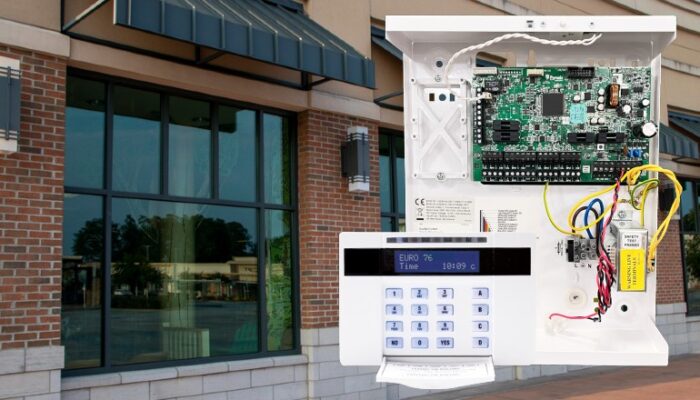
Bradford Commercial Burglar Alarms – Bradford’s commercial environment is fast-paced and varied, with businesses operating across retail units, offices, warehouses and multi-tenant buildings. These premises experience constant movement during the day and extended periods of vulnerability overnight, making effective intruder detection essential. Commercial burglar alarm systems in Bradford must therefore be designed to manage both high activity and high risk, providing structured protection without disrupting operations.
One of the defining challenges in Bradford is the diversity of building types. Many commercial premises are shared between multiple businesses or have evolved over time, resulting in complex layouts. Alarm systems must be carefully designed to ensure consistent coverage across all areas, including shared corridors, access points and private units.
Zoning is a key feature in commercial burglar alarm systems. By dividing a building into separate zones, businesses can control security in a way that reflects how the premises is used. For example, a retail shop may arm the sales floor after closing while office areas remain accessible for administrative work. In multi-tenant buildings, zoning allows individual businesses to secure their own spaces independently while maintaining protection across communal areas.
Detection strategy must be tailored to the environment. In Bradford’s commercial premises, a layered approach is typically used to provide both early warning and internal monitoring. Perimeter protection forms the first line of defence, with door contacts and window sensors triggering the alarm as soon as an entry point is opened. In higher-risk areas, vibration sensors can detect attempts to force entry before access is gained.
Internal detection provides a second layer of security. Motion sensors are installed in key areas such as corridors, stockrooms, offices and access routes. These sensors are positioned to cover natural movement paths through the building, ensuring that any unauthorised activity is detected quickly. In larger or more complex premises, dual-technology sensors may be used to improve reliability and reduce false alarms.
Signalling is a critical component of commercial alarm systems. Many Bradford businesses rely on monitored systems that communicate with an alarm receiving centre via secure dual-path signalling. When an alarm is triggered, the monitoring centre can initiate a response, contacting keyholders or emergency services as required. This is particularly important for premises that are unoccupied overnight or during weekends.
Integration with other security systems enhances overall effectiveness. CCTV systems can be linked to the alarm, allowing visual verification of an activation. This reduces false call-outs and provides immediate insight into what is happening on site. Integration with access control systems can also ensure doors respond appropriately during an alarm event.
Modern burglar alarm systems also offer improved user control. Mobile applications allow authorised users to arm or disarm the system remotely, receive real-time alerts and monitor system activity. This is especially useful for business owners managing multiple sites or working off-site.
Maintenance is essential to ensure system reliability. Commercial alarm systems should be serviced regularly, with sensors, control panels and communication pathways checked for faults. Routine testing ensures the system remains operational and helps identify any issues before they impact security.
False alarms can be particularly disruptive in busy commercial environments. Frequent activations can interrupt business operations and lead to unnecessary call-outs. Proper system design, correct sensor placement and regular maintenance all help minimise the risk of unwanted activations.
For businesses in Bradford, a commercial burglar alarm system must be structured, reliable and adaptable. When designed correctly, it provides effective intrusion detection that supports both security and operational efficiency, forming a key part of a wider security strategy.